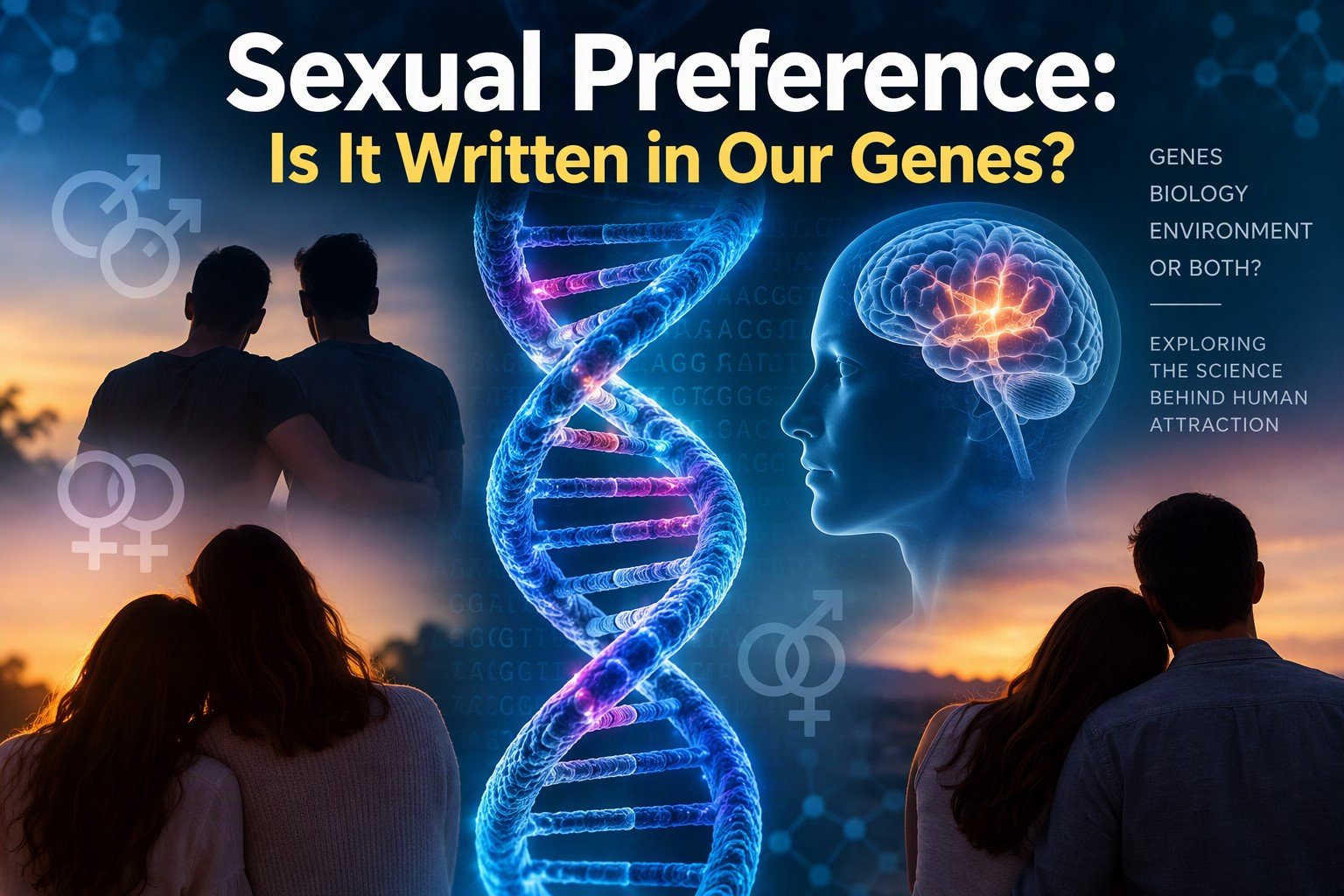
Few questions about human nature draw as much curiosity and debate as where sexual preference comes from. Is it shaped mainly by genes, by upbringing, or by something else? Modern research says it isn’t an either-or question. Sexual preference appears to emerge from a combination of genetic, prenatal, and developmental influences, and no one of them tells the whole story.
This article looks at what science currently knows, and what it doesn’t.
.
.
What Is Sexual Preference?
In scientific literature, sexual preference is usually called sexual orientation: a person’s enduring pattern of emotional, romantic, and sexual attraction to others. The American Psychological Association describes it as a continuum that includes heterosexual, homosexual, bisexual, and other patterns of attraction.
Researchers have studied the factors behind these patterns for decades, and the findings are more nuanced than the popular debate suggests.
.
The Genetic Component of Sexual Preference
The strongest evidence that genes play a role comes from family and twin studies. Identical twins, who share virtually all of their DNA, are more likely to share a sexual orientation than fraternal twins, which points to a hereditary contribution. But the match is far from perfect, which means genes can’t be the only factor.
Just as important, no single “gay gene” or “straight gene” has ever been found. The largest genetic study of the topic to date, published in Science in 2019, analyzed nearly 500,000 people. It found that many genetic variants each have a very small effect, and that together they account for only a modest share of the differences between individuals. The authors concluded that genetics cannot be used to predict a person’s sexual orientation.
Key takeaway: Genes matter, but they don’t act alone. Many small genetic influences work together, alongside non-genetic factors.
.
What About Specific Genes and Chromosomes?
Earlier studies reported links between male sexual orientation and regions on chromosome 8 and the X chromosome (Xq28). Genome-wide association studies (GWAS) have since identified a handful of additional genetic markers linked to same-sex sexual behavior.
Two cautions apply:
- These markers explain only a small fraction of the variation seen in the population.
- Some early findings, particularly those on Xq28, have been difficult to replicate consistently.
Genetics clearly contributes, but it cannot explain why any one person develops a particular orientation.
.
Beyond Genes: Prenatal Biology
Biological influences begin before birth. Researchers have explored several factors, including:
- Prenatal hormone exposure
- Fetal development
- Differences in brain structure
- Epigenetic modifications
Studies of people exposed to atypical hormone levels in the womb suggest that early biological conditions may shape later orientation. Some scientists have also proposed that epigenetic mechanisms, which regulate how genes are switched on or off without changing the DNA sequence, could help explain these effects. This area is still developing, and many of its hypotheses remain unproven.
.
Does Environment Play a Role in Sexual Preferene?
“Environment” is often misunderstood in this discussion. The evidence does not support the idea that parenting style, childhood experiences, education, or social influences alone determine sexual orientation. At the same time, researchers acknowledge that non-genetic factors shape human development in ways that are not yet fully understood.
What the evidence does support is that sexual orientation develops through a mix of biological and developmental influences, not through conscious choice.
.
What Does Modern Science Conclude?
The scientific consensus is that sexual preference is a complex trait. Like height, intelligence, or personality, it arises from the interaction of many genetic and non-genetic factors.
- ✅ Sexual preference is influenced by genes.
- ✅ There is no single “gay gene” or “straight gene.”
- ✅ Prenatal biological factors appear to be important.
- ✅ Environmental and developmental influences also contribute.
- ✅ Scientists are still uncovering the full picture.
.
The Future of Research
Advances in genomics, epigenetics, and neuroscience are rapidly expanding what we know. Larger and more diverse study populations may reveal new genetic pathways and biological mechanisms. Rather than hunting for a single cause, researchers increasingly treat sexual orientation as the product of a complex biological system shaped by genes, development, and life experience.
.
Conclusion
So, is sexual preference written in our genes? Partly. Genes are an important part of the story, but far from all of it. Sexual orientation emerges from many genetic variants, prenatal influences, and developmental factors working together, and as research continues, our understanding of this fundamental part of human diversity will only deepen.
.
References
- Ganna A, et al. Large-scale GWAS reveals insights into the genetic architecture of same-sex sexual behavior. Science (2019). PubMed · Full text
- Oginni OA, et al. Genetic and Environmental Influences on Sexual Orientation. Arch Sex Behav (2023) doi: 10.1007/s10508-023-02761-w
- Sanders AR, et al. Genome-wide scan demonstrates significant linkage for male sexual orientation. Psychol Med (2015). PubMed
- American Psychological Association. Understanding Sexual Orientation and Homosexuality. apa.org
- Ngun TC, Vilain E. The Biological Basis of Human Sexual Orientation: Is There a Role for Epigenetics? Advances in Genetics (2014). 10.1016/B978-0-12-800222-3.00008-5
.
.
Generated using Microsoft Copilot and Claude
.
.
See also
Sex Addiction: Is It in the Genes?
.
.