AI tools are transforming the bioinformatics research. Artificial intelligence is no longer just a buzzword—it’s becoming a cornerstone of modern bioinformatics. From predicting protein structures with unprecedented accuracy to streamlining genome analysis, AI-powered tools are accelerating discoveries and reshaping how researchers and students approach complex biological questions.
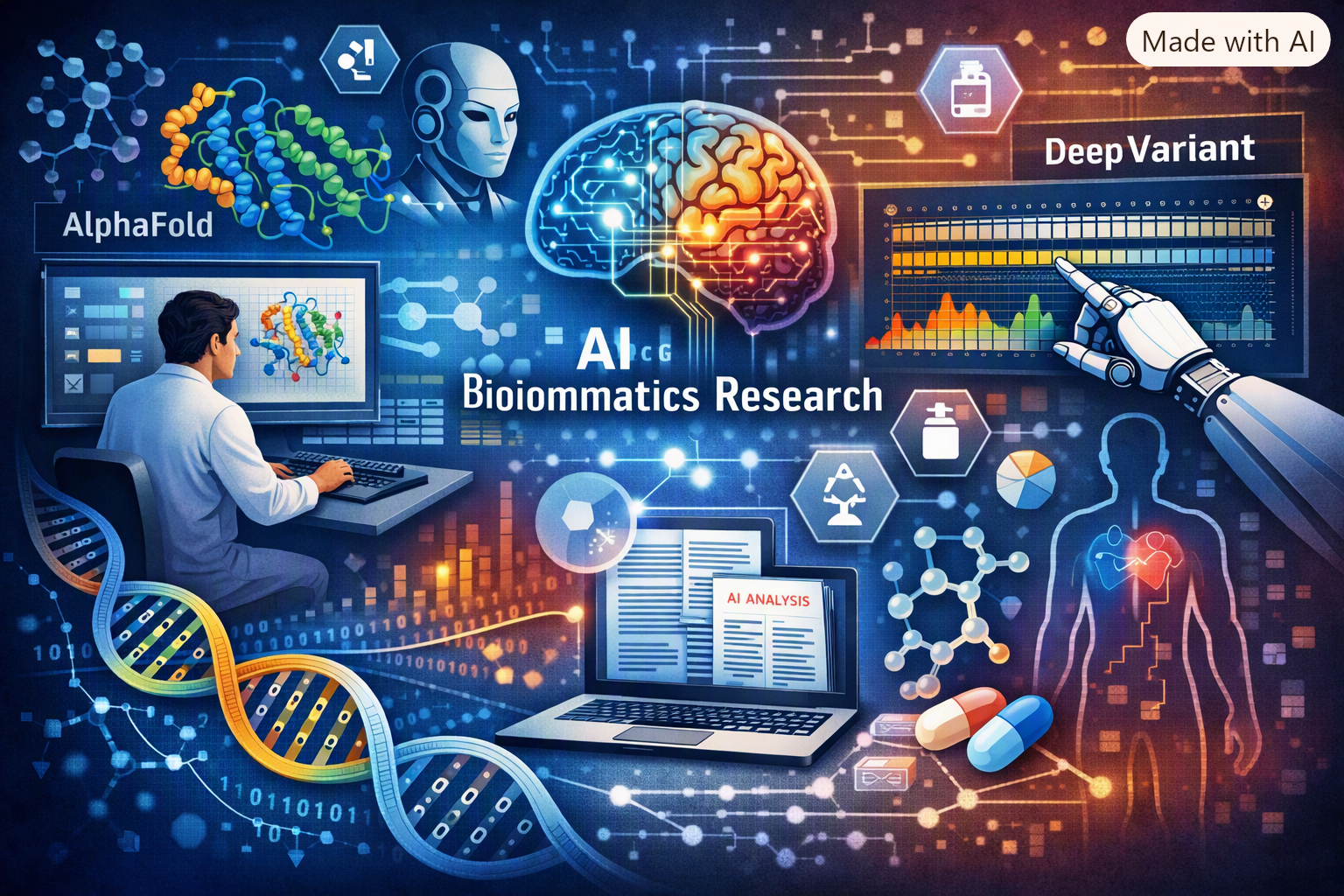
🔍 AI Tools: AlphaFold — Revolutionizing Protein Structures
When DeepMind released AlphaFold, it changed the landscape of structural biology overnight. By predicting protein structures with near-experimental accuracy, AlphaFold has enabled researchers to understand protein function, design new drugs, and accelerate discoveries that once took years.
- Impact: Structural insights into diseases like Alzheimer’s and cancer.
📊 AI Tools: DeepVariant — Smarter Genomic Variant Calling
Google’s DeepVariant applies deep learning to sequencing data, producing highly accurate variant calls. This tool is especially powerful in clinical genomics, where precision matters for diagnosis and personalized medicine.
- Impact: Improved detection of rare variants and reduced false positives.
📚 AI for Literature Summarization
Keeping up with the flood of new research is daunting. AI tools like ChatGPT or Scholarcy can summarize complex papers into digestible insights.
- Impact: Saves time for students and researchers by distilling key findings.
🚀 Conclusion — The Future of AI in Bioinformatics
Artificial intelligence is no longer a distant promise; it’s already reshaping how we study life at the molecular level. From predicting protein structures with unprecedented accuracy to streamlining genome analysis and accelerating drug discovery, AI tools are becoming indispensable in both research and education.
For students, these tools offer hands-on opportunities to learn cutting-edge methods without needing massive lab infrastructure. For researchers, they provide speed, precision, and new ways to tackle complex biological questions.
As AI continues to evolve, the challenge will be balancing innovation with ethics — ensuring that breakthroughs in genomics and medicine are used responsibly, transparently, and inclusively.
📢 Call to Action
Bioinformatics thrives on collaboration. Share your thoughts in the comments:
- Which AI tool do you find most exciting?
- Have you tried AlphaFold, DeepVariant, or any other AI-powered platforms?
- What role do you think AI should play in bioinformatics education?
📚 Recommended References
- Jumper J, Evans R, Pritzel A, et al. Highly accurate protein structure prediction with AlphaFold. Nature. 2021;596(7873):583‑589.
- Poplin R, Chang PC, Alexander D, et al. A universal SNP and small‑indel variant caller using deep neural networks. Nat Biotechnol. 2018;36(10):983‑987.
- Mahmud MI, Banerjee T. Artificial Intelligence in Genomics: A Comprehensive Survey of Methods, Resources, Challenges, and Prospects. Brief Bioinform. 2026.
- Karim W, Rahman M, Sultana N, et al. Generative Artificial Intelligence in Bioinformatics: A Systematic Review of Models, Applications, and Methodological Advances. Arch Comput Methods Eng. 2026.
Pingback: Unlocking Precision Medicine: How AI-Powered Genomic Variant Calling with DeepVariant is Changing Bioinformatics